In this section
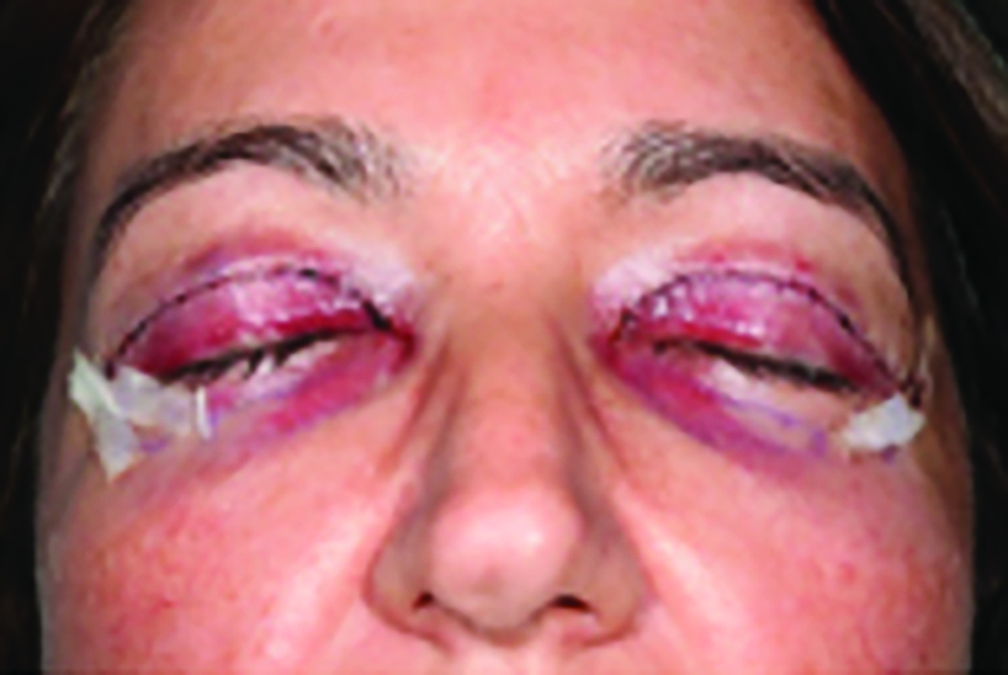
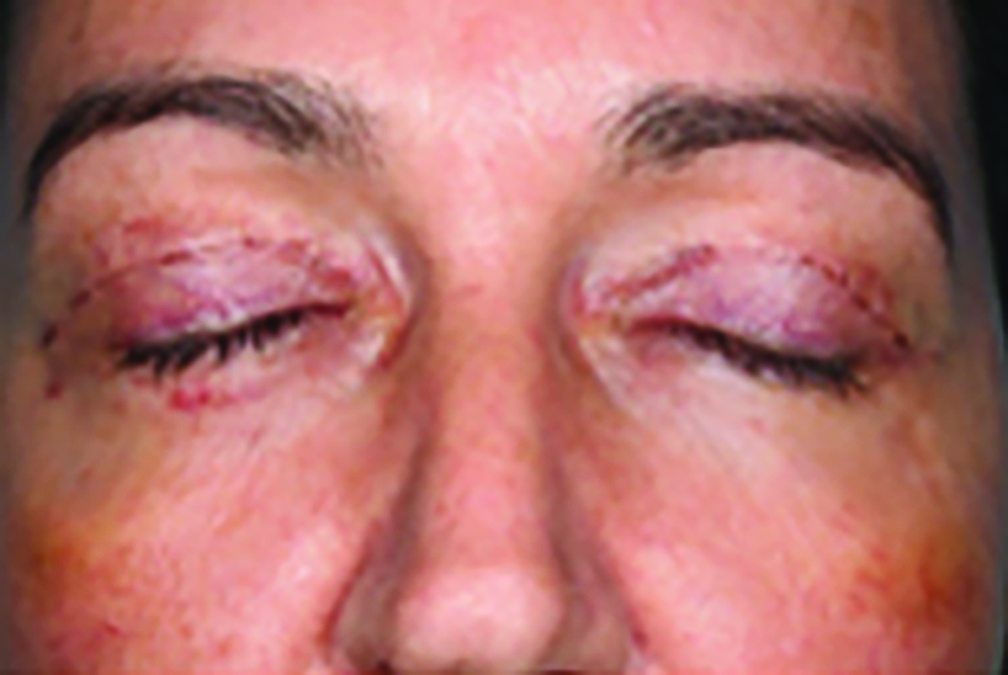
Post-blepharoplasty hematoma
% Reduction in hematoma discoloration after 1 week
Liposomal lactoferrin was found to reduce discolouration post-blepharoplasty by 31.5% after applying liposomal lactoferrin to the skin wound for 1 week versus 11.1% without application of liposomal lactoferrin.¹ Left eye treated with liposomal lactoferrin and no treatment on right eye.
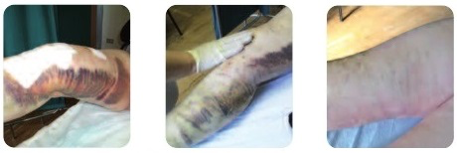
Acute and chronic cutaneous dyschromia
Another study2 showed that the discolouration and edema were reduced significantly when liposomal lactoferrin was applied in acute cases of cutaneous dyschromia and hypotrophy. Acute case: full resolution in 72 hours and suspension of liposomal lactoferrin treatment.
Furthermore, it was demonstrated in long-term application in chronic cases with equal effectiveness. Chronic case: partial recovery after two months of liposomal lactoferrin treatment.
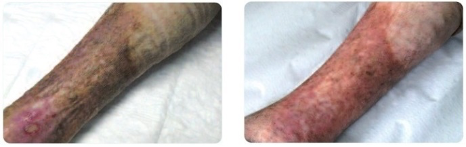
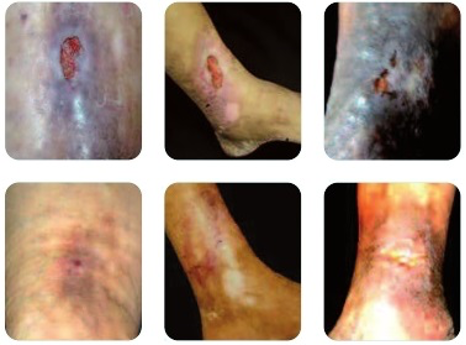
Ulcerated hemosiderinic dyschromia
Not limited to post-blepharoplasty, cutaneous dyschromia and hypotrophy, liposomal lactoferrin was able to speed up the healing process of ulcers whereby hemosiderinic dyschromia was lightened with concomitant reduction of edema and pain3. Treatment of ulcers with liposomal lactoferrin for 6 months.
Where to buy
Find Bruise-eze® at a location near you
Enter your postcode to show stockists.
References
1. Martinez Grau, G., Lopez, M., Gomez, MC. (Dept. of Orbital & Ocular Plastics, Brill Pharma, S.L.)Use of Liposomal Lactoferrin in Post-Blepharoplasty Hematoma. In: XXIX SECPOO (Spanish Society of Ocular and Orbital Plastic Surgeons) Congress; 5-7 June 2019; Barcelona.
2. Musso, A., Aloesio, R., & Caponi, R. (2015). Use of a topical preparation based on lactoferrin to manage acute and chronic cutaneous dyschromia and hypotrophy. Acta Vulnologica, 13(2), 77-89.
3. Brizzio, E., Castro, M., Narbaitz, M., Borda, N., Carbia, C., Correa, L., Mengarelli, R., Merelli, A., Brizzio, V., Sosa, M., Biancardi, B., & Lazarowski, A. (2012). Ulcerated hemosiderinic dyschromia and iron deposits within lower limbs treated with a topical application of biological chelator. Vein and Lymphatics, 1:e6.