In this section
Why lactoferrin
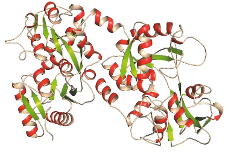
Lactoferrin is a monomeric glycoprotein of the transferrin family with an affinity for iron and has 2 iron-binding domains.
It is a natural molecule synthesised by epithelial cells and secreted in the mucous membranes. It is a key component in the body’s first line of defense, since it acts as an iron chelator, capturing heavy metals and thus avoiding the toxicity problems derived from their accumulation.
From bruise to clear skin
Six activities of lactoferrin
It has iron-chelating, anti-inflammatory, re-healing, bacteriostatic, antibiofilm and anti-oxidant activities.
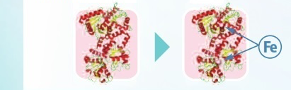
Iron-chelating activity
Lactoferrin is an iron chelating glycoprotein that even in the acidic environment of inflamed tissue, has an affinity for iron 260 times greater than that of transferrin.
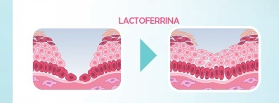
Re-healing activity
Lactoferrin significantly promotes proliferation of keratinocytes and their migration, essential factors for the epithelialization of damaged tissue.
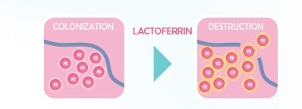
Antibiofilm activities
Lactoferrin has been shown to inhibit biofilm formation and disrupt existing biofilms.
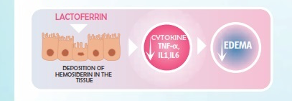
Anti-inflammatory activities
Lactoferrin decreases edema by modulating the migration, maturation and cell functions involved in the inflammatory process.

Bacteriostatic activity
Lactoferrin, by chelating iron, prevents replication of bacteria that use iron, such as pabulum.
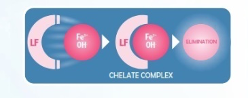
Antioxidant activity
Indirect: Lactoferrin chelates the iron that is the catalyst of free radical formation reactions.
Direct: Lactoferrin binds to free radicals and acts as “Sacrificial Scavenger for reactive oxygen species”.
Where to buy
Find Bruise-eze® at a location near you
Enter your postcode to show stockists.