In this section
What happens under the skin
A bruise forms when tiny blood vessels beneath the skin break, usually after a knock, a fall, a sports injury or even a minor bump. Blood leaks into the surrounding tissue and spreads out under unbroken skin, which is why a bruise can look discoloured and feel painful, swollen, stiff or tender.
Not every bruise is the same. The three you’ll hear about most are:
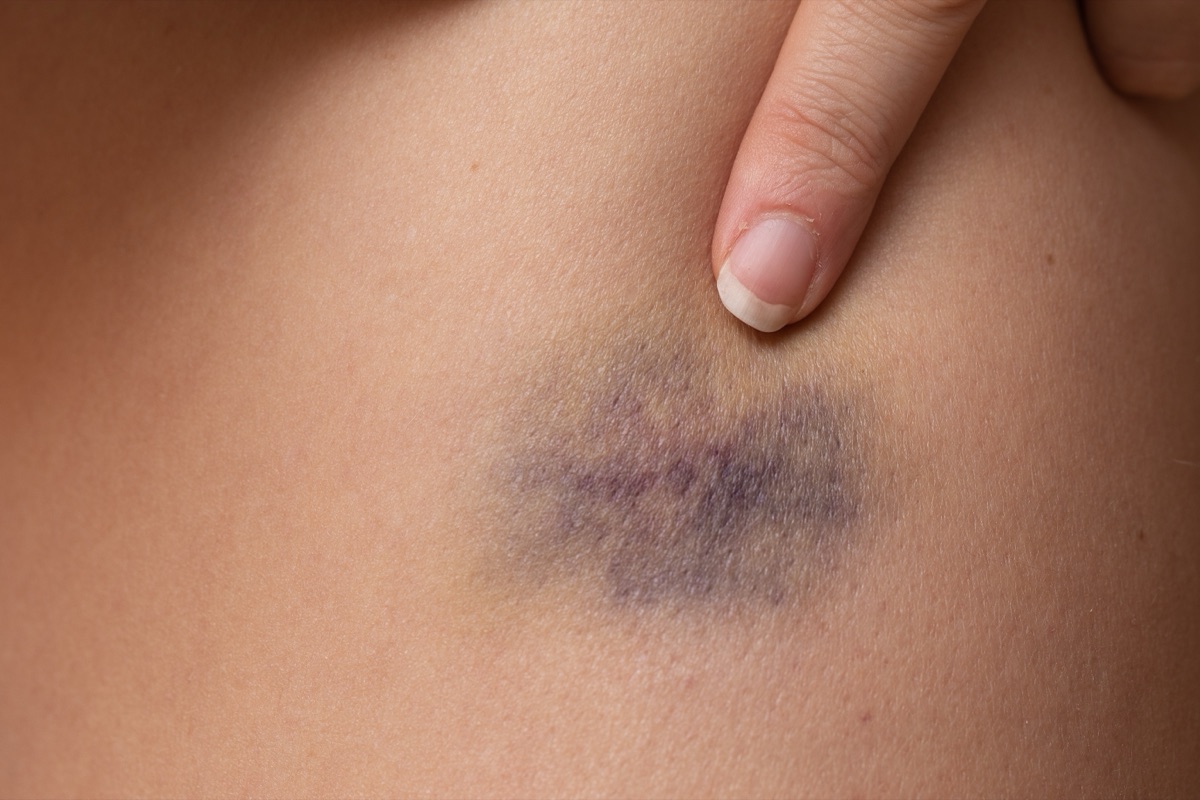
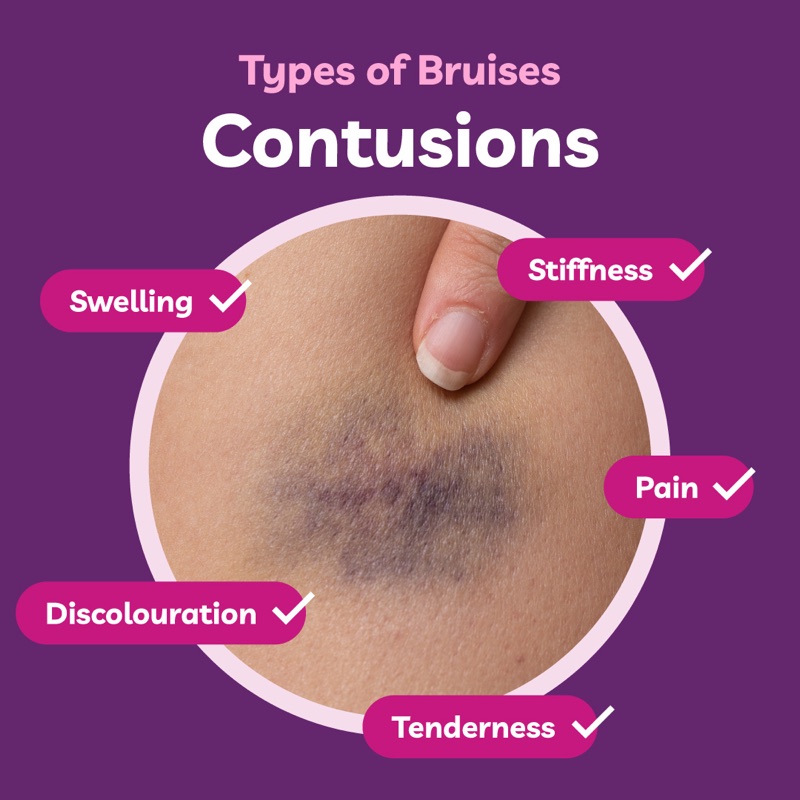
Contusions
Bigger bruises caused by harder blows to the skin. They’re typically painful, swollen and discoloured, and can be stiff or tender.
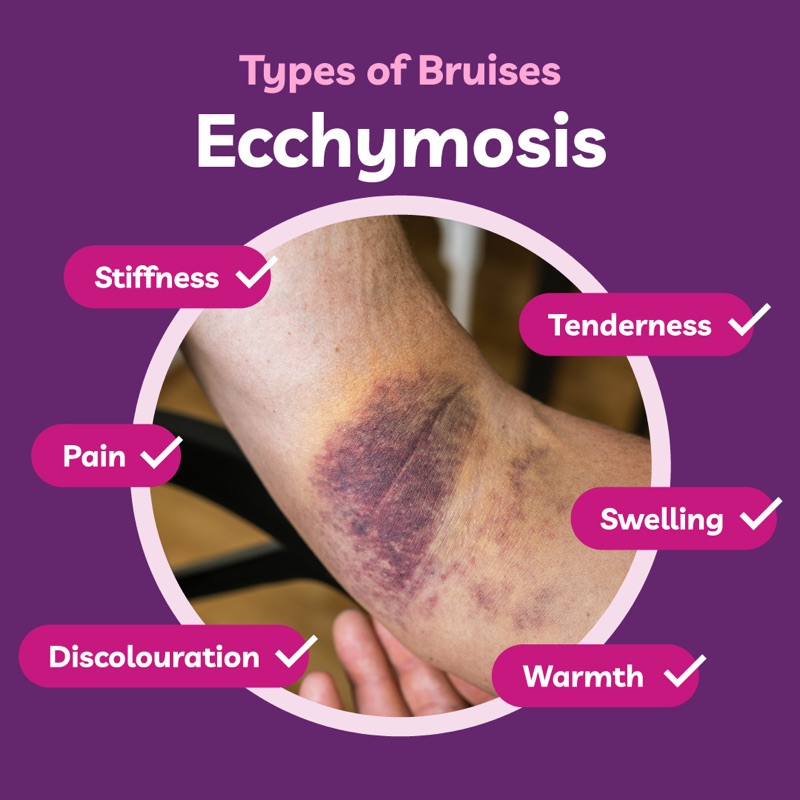
Ecchymosis
Flat, purple bruises that happen when blood leaks into the top layers of the skin, often over a broader area than a typical bruise.
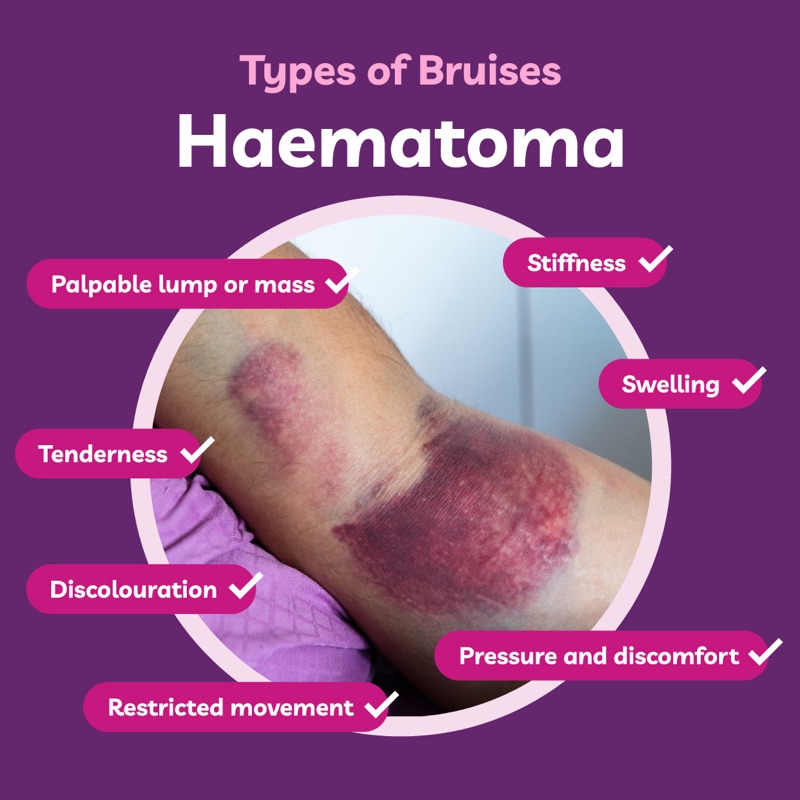
Haematoma
A lump under the skin formed by clotted blood. The area is usually swollen, raised or painful.
Why bruises change colour
A fresh bruise looks red, blue or purple. As the body breaks down haemoglobin, it turns greenish (biliverdin), then yellow (bilirubin). Iron stored as haemosiderin can leave a yellow-brown tint that lasts longer than the bruise itself.
Where iron comes in
Fresh bruises appear blue to reddish purple because of iron released from the breakdown of haemoglobin. The discolouration that follows a haematoma or ecchymosis is due to this iron accumulating in the skin. Left there, iron can trigger a chain of reactions that produce free radicals.
Lactoferrin is a natural protein found in the body’s innate immune system, with a strong affinity for iron. It binds to this iron, which is then broken down by the immune system.
Keep reading
Where to buy
Find Bruise-eze® at a location near you
Enter your postcode to show stockists.